The World Food Crisis: Sources and Solutions
By Fred Magdoff
An acute food crisis has struck the world in 2008. This is on top of a longer-term crisis of agriculture and food that has already left billions hungry and malnourished. In order to understand the full, dire implications of what is happening today it is necessary to look at the interaction between these short-term and long-term crises. Both crises arise primarily from the for-profit production of food, fiber, and now biofuels, and the rift between food and people that this inevitably generates.
‘Routine’ Hunger before the Current Crisis
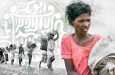
Of the more than 6 billion people living in the world today, the United Nations estimates that close to 1 billion suffer from chronic hunger. But this number, which is only a crude estimate, leaves out those suffering from vitamin and nutrient deficiencies and other forms of malnutrition. The total number of food insecure people who are malnourished or lacking critical nutrients is probably closer to 3 billion—about half of humanity. The severity of this situation is made clear by the United Nations estimate of over a year ago that approximately 18,000 children die daily as a direct or indirect consequence of malnutrition (Associated Press, February 18, 2007). Read more
Nepal Elects First Gay Politician
Nepal’s first openly gay politician was selected to represent a small communist party in the country’s new constituent assembly, a party official said.
Ganesh Shah, general secretary of the Communist Party of Nepal, said that Sunil Babu Pant was chosen to lead the party to “ensure the rights of gay and other minority groups. He will be the first person to represent Nepal’s gay community.”
Pant currently heads the only gay rights group in Nepal, the Blue Diamond Society.
“Representing a sexual minority, I will make sure the new constitution protects sexual groups, people with disabilities, small indigenous castes, and others,” Pant told AFP.
The Communist Party of Nepal has five seats in the 601-member body, which is slated to write the nation’s constitution.
-The Advocate
May Day marked worldwide, half a million rally in Havana
May Day rally in Pakistan (May1, 2008)
May Day was marked throughout the world with a mix of rallies, violence and even rays of hope, news agencies reported. There were massive rallies across the Indian subcontinent, Indonesia and other Asian countries.
May Day Celebrations kicked off throughout Cuba on Thursday morning with over half a million Havana citizens staging a huge march at the city’s Jose Marti Revolution Square, in the presence of Cuban Presdient Raul Castro Ruz.Bearing banners, posters and placards, people demonstrated in support of Socialism and against Washington’s hostile Cuba policy. They also demanded the release of the five Cubans held for nearly 10 years now in US prisons. Read more
Speculation behind food price rise, says Indian Left
The US secretary of state had on Tuesday blamed the global food crisis on improved diet in India, China
NEW DELHI: Condoleezza Rice may have got the idea from agriculture minister Sharad Pawar. But she got it on Wednesday from the comrades, who said the Americans were the biggest food consumers in the world, not Indians or the Chinese.
A few weeks after the Maratha leader said the food shortage was because, among other things, south Indians were eating more rotis and “the purchasing power of the poor had increased due to welfare measures such as the rural employment scheme”, the US secretary of state said on Tuesday the global food shortage was due to the improved diets of the people in India and China.
“Improvement in the diets of people in India and China” is forcing the governments in the two countries to keep food “inside”, which is a cause for the current global supply shortage, she said.
CPI(M) politburo member Sitaram Yechury and CPI Rajya Sabha member D Raja condemned the “imperial” remarks on Wednesday. While Yechury said they were “bad, indecent and cruel”, Raja said he wanted to raise the issue in parliament but could not due to technical reasons. Read more
India’s giant stride into space
On April 28, 2008 India’s PSLV rocket launched from Satish Dhavan Spece Centre, Sriharikota successfully launched ten satellites in one go into space. It broke the earlier Russian record of launching 8 satellites from one rocket.
The launch successfully put the 690 kg Indian remote sensing satellite CARTOSAT-2A, the 83 kg Indian Mini Satellite (IMS-1) and eight nanosatellites for international customers into a 637 km polar Sun Synchronous Orbit (SSO). PSLV-C9 in its ‘core alone’ configuration launched ten satellites with a total weight of about 820 kg.
India’s next big challenge is the launch of Chandrayaan-1 (Moon Craft), the country’s maiden shot at the Moon to be launched later this year using the PSLV.
A $100m mission, it is meant to map the Moon surface in detail like never before and will undertake the most intense search for water on our nearest neighbour.
Source: ISRO, BBC etc.
Indian Taxi Driver stabbed in Melbourne, protest strike in progress
Security footage of the knife attack on the taxi driver.
Photo: Victoria Police
By our community reporter
Melbourne, April 29: An Indian taxi driver, aged 23, who is also an international student was stabbed here last night. His taxi was found crashed near Gold Street, Clifton Hill. The wounded body of the driver was found by police about 300 meters from the taxi at about 5.30 am in the morning. The driver is in hospital and said to be in a critical state. Police have refused to release the name or other details of the victim.
A report in The Age says: “Detectives believe he was attacked some time around 3am, possibly in Hodgkinson Street near Wellington Street.It is believed his attacker then drove the taxi a short distance before it collided with a power pole near the corner of Gold Street and Queens Parade.Two men who were walking along Hodgkinson Street found the 23-year-old driver about 5.30am.”
Meanwhile, Victorian Taxi Drivers Association Council (VTAC) has informed South Asia Times that a protest strike action by taxi drivers is now on near Federation Square in Melbourne.
Why food prices rising the world over?
The trading frenzy that sent prices soaring
By Iain Macwhirter
Published 17 April 2008
Iain Macwhirter on why the price of basic foodstuffs rocketed, from London to Haiti
Four people were killed in food riots in Haiti. From Bolivia to Uzbekistan there have been violent protests against the doubling of food prices. In Italy, mothers are marching against the price of pasta. The World Food Programme has seized up and the World Bank on 13 April forecast that 100 million people face starvation. It should not have come as a surprise.
Conventional explanations for the food crisis range from climate change to dietary change in China, from global overpopulation to the switch of agricultural production to biofuels. These long-term factors are important but they are not the real reasons why food prices have doubled or why India is rationing rice or why British farmers are killing pigs for which they can’t afford feedstocks. It’s the credit crisis. Read more
SBS to screen two stories, one set in India & one about the Indian community in Malaysia on Wednesday (April 23 at 8.30pm)
DATELINE: TORCHING THE RELAY
Wednesday 23 April
8.30pm
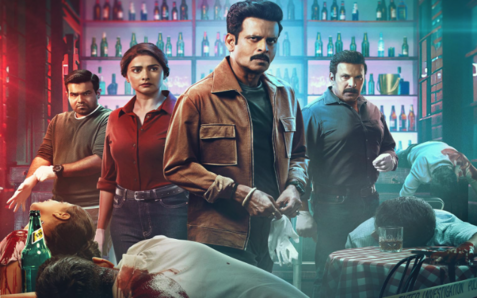
Coming up on Dateline, be a fly on the wall as those hell-bent on disrupting the Olympic Torch Relay (April 17) plan – and execute – their protests.Dateline’s David Brill – a veteran correspondent with over 40 years experience covering wars and disasters – was in New Delhi the day before and the day of the protests.
DATELINE: MALAYSIA’S INDIAN UPRISING
Wednesday 23 April
8.30pm
Coming up on Dateline, the David and Goliath story that emerged from the recent Malaysian elections. When tens of thousands of ethnic Indians took to the streets of Kuala Lumpur at the end of last year (2007), it marked a sea change in Malaysian politics. The Indian community – for decades on the lowest rung of Malaysian society – decided to fight for their rights.
Source: SBS Media Release
Nepal & communist victory isn’t as surprising as some would have us believe
Red flag over Nepal
BY AMARESH MISRA
H E WAS once criticised by his party for his fondness for momos. Along with the regular Gregorian calendar that we all follow, he also uses the Hindu Shaka calendar He is a Maoist who has beaten all Marxist-Leninists to emerge as the leader of the world’s first elected far-Left party The irony of the impending Maoist electoral victory in the Nepalese constituent assembly led by this man, Pushpa Kamal Dahal a.k.a. Prachanda, never ceases to amaze. This was a force that every communist and democratic formation of the subcontinent had written off as a ‘bunch of anarchists’. The Communist Party of Nepal (Maoist) - the CPN(M) - was, in fact, painted as yet another terrorist outfit.
But Nepal had not yet given its verdict. The pro-democracy movement in 1990 had ushered in the concept of a multi-party democracy in this landlocked, feudal country where bourgeois impulses were weak and where monarchy flourished. But as years went by, the Nepali Congress and the Communist Party of Nepal (Unified Marxist-Leninist) - CPN(UM-L) the two mainstream parties in the country, were unable to address the people’s concerns. The power of the king was curtailed, but a move to impose constitutional monarchy was shot down as the Royal Nepalese Army (RNA) became ambitious and the king too became a willing tool in the hands of the United States, which was keen on building Nepal as a buffer between India and China. The RNA-backed monarchy started clawing back to power in a bid to regain privileges lost during the pro-democracy movement. The prodemocracy mainstream parties, with no armed cadre to respond to the violence unleashed on the Nepalese people by the Palace-RNA combine, felt helpless.
It was at this point in 1996 that the Maoists stepped in. Realising that pro-democracy parties had been taken for a ride and were becoming irrelevant in the new situation of counter-revolutionary offensives, they retired to the villages, jungles and hills to mobilise the Nepalese peasantry At first, the Maoists did not have weapons either During the 1990 pro-democracy movement, they were part of the general ‘Left impulse’, which had laid emphasis more on mass movement than on armed struggle. Read more
L. K. Advani: Catholic education, Hindutava mindset
Advani went to a Catholic school and a RSS `Shakha`, but practices
only what he learnt in the RSS
John Dayal’s micro review of “My Country. My life”, the autobiography
by Lal Krishan Advani, the man aspiring to be the next Prime Minister
of India
Just about every class and group has panned the Rashtriya Swayamsevak Sangh- Bharatiya Janata Party’s Prime ministerial aspirant, Mr. LalKrishan Advani’s book “My country, my life” for its shallow, and error-filled, documentation of contemporary Indian history.
He may have gone to a Catholic School in his hometown Karachi, now in Pakistan, before joining a `Shakha’ or branch of the Rashtriya Swayamsevak Sangh, the hyper nationalistic Hindu volunteer corps. Those of us who have followed the last forty of Mr. Advani’s sixty years in political life in India, know he remembers only what he leant in the saffron brotherhood of the RSS.
Mr. Advani’s commentary on Dalit issues and Christian persecution amply proves that though he desperately wants to come across as a cosmopolitan and pan-national leader on the pattern of Mr. Atal Behari Vajpayee, he firmly retains the chauvinistic and communal mindset of the Sangh Parivar
Mr. Advani follows Hindutva’s efforts to appropriate Dr. Ambedkar. He quotes the author of `Riddles of Hinduism’ to say Dr. Ambedkar didn’t convert to Islam or Christianity because it “meant going away from the cultural soil of India.” But he fails to mention that Ambedkar, who chaired the framing of the Indian Constitution, also famously said “I was born I Hindu, but I will not die as one”, as he converted, with hundreds of thousands of other Dalits, to neo Buddhism.
Mr. Advani finishes his discourse on the Christian situation in India in just about 1,000 words in the 986-page tome, trying very hard todistance himself and his party from the anti Christian violence, which he attributes entirely to `conversions.’ Read more